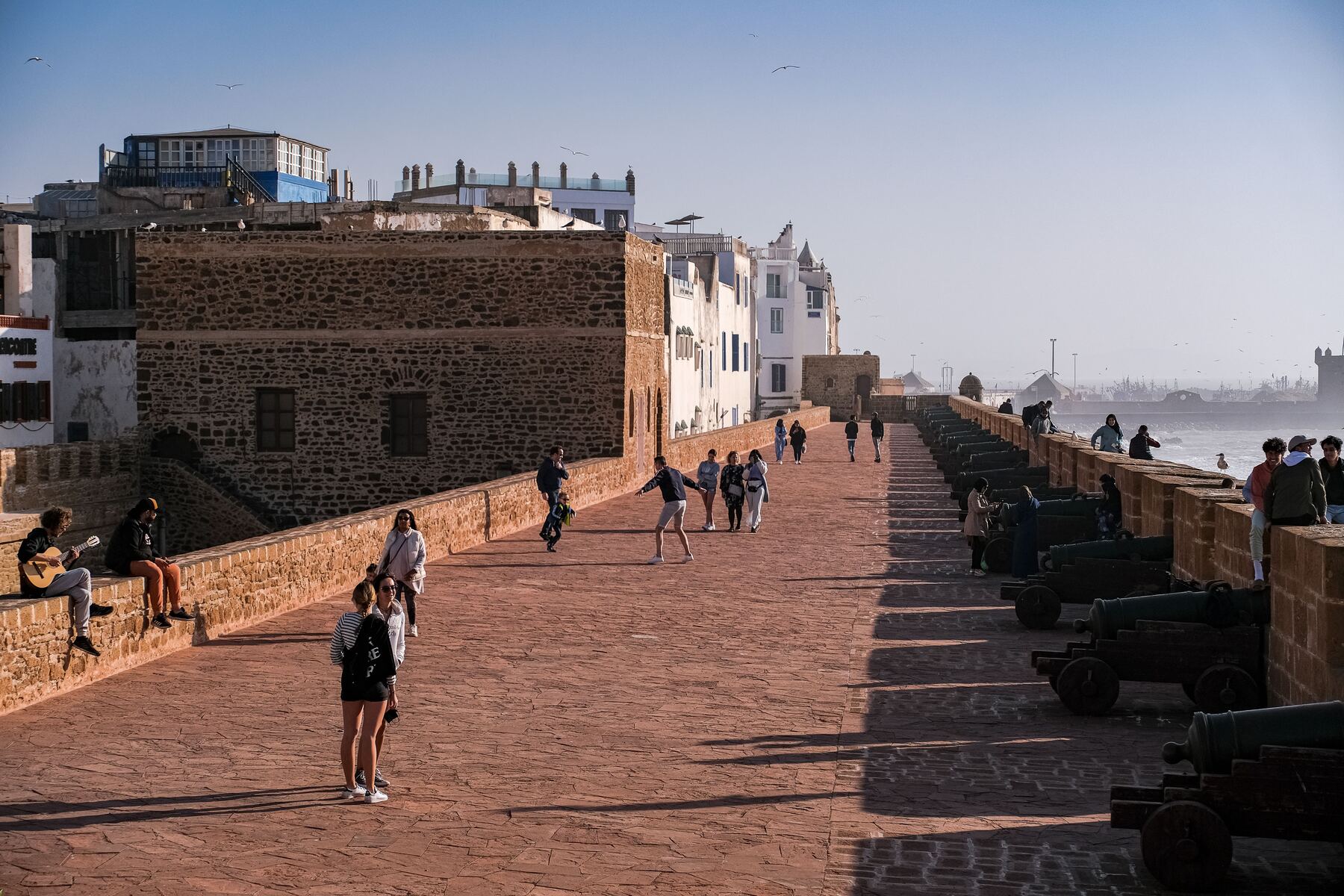
Between Essaouira and Agadir lies the only area in the world where argan trees grow naturally — an endemic tree listed as a UNESCO World Heritage. This rarity makes it both a regional treasure and a prime target for counterfeits. Here's how to spot authentic argan oil, and how to buy the rest of the local crafts the right way without getting ripped off.
Spotting real argan oil
Global demand for argan oil has exploded in recent years, and with it, cut or poor-quality oils. A genuine, pure, cold-pressed argan oil can be recognised by a few simple signs:
- Colour: golden to amber for food-grade oil (roasted), pale yellow for the cosmetic version. A colourless or fully transparent oil is suspicious — often over-filtered or diluted.
- Smell: a light hazelnut scent for cosmetic oil, a more pronounced roasted-hazelnut smell for food-grade. A completely odourless oil, or conversely one with a chemical smell, should raise a flag.
- The label: the only ingredient listed should be "Argania Spinosa Kernel Oil." If other vegetable oils appear in the composition, it's no longer pure argan oil — even if the front label says "argan oil."
- The bottle: a serious producer packages their oil in brown or amber glass, never clear plastic — argan oil is sensitive to light oxidation.
- The price: producing one litre of pure argan oil takes 30 to 40 hours of manual labour for 30 to 40kg of nuts. An oil sold at an abnormally low price is almost always diluted.
Why prioritise women's cooperatives
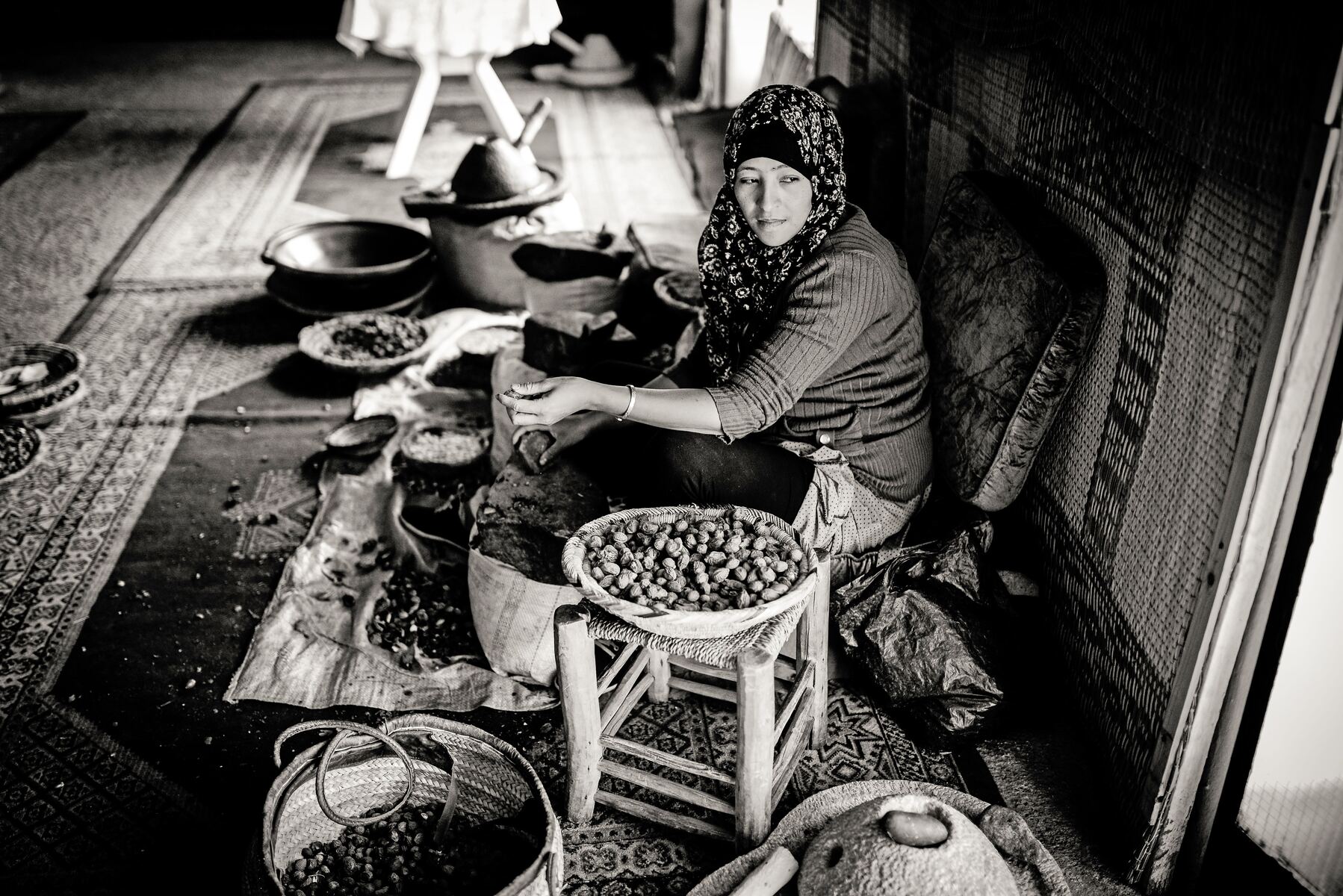
Argan oil is traditionally produced by Berber women's cooperatives in the Souss region and around Essaouira, who process the fruit following know-how passed down through generations. Buying directly from a cooperative offers several advantages: guaranteed authenticity (no middleman or risk of substitution), product freshness, and direct social impact — every purchase pays the women who produced it.
Visiting a cooperative near Essaouira generally lets you watch a pressing demonstration and test the oil before buying — the ideal chance to check the colour, smell and texture of the product yourself.
Want to visit a real cooperative?
Meet the women who hand-press argan oil, near Essaouira.
Thuya wood: a centuries-old craft
Essaouira is also known for its thuya wood marquetry, a skill passed down for over 300 years in the medina's workshops. This local timber, with its brown-pink, fragrant grain, is carved and inlaid by hand — a simple box generally takes between 100 and 200 hours of work depending on its complexity.
To spot a genuinely handmade piece, look for small irregularities in the wood: an authentic handcrafted object is never perfectly symmetrical, unlike industrial production. The quality of the polish (often done with pumice stone and beeswax) gives a natural, deep shine, very different from the glossy varnish of a manufactured object. A well-maintained thuya box (waxed once or twice a year) can last for decades.
Silver jewellery
The jewellers' souk, located near the Skala de la Ville, brings together craftsmen working silver using techniques inherited from Berber, Andalusian and Jewish traditions — a blend of influences that gives Essaouira's jewellery its unique character. Bracelets, brooches and buckles adorned with floral or geometric motifs can be found here at prices noticeably more affordable than in Europe, provided you check the metal's quality (925 silver, or sterling silver, is the standard for quality jewellery).
How to negotiate well in the souks
Haggling is an integral part of Moroccan culture, and is generally practised in a relaxed, respectful atmosphere — Essaouira's souks are in fact known for their lack of aggressive touts, unlike other cities in the country. Here are a few simple principles:
- Stay courteous and smiling: kindness often lowers prices more effectively than insistence.
- Set yourself a limit before negotiating, and stay consistent with it rather than getting carried away by the exchange.
- Show interest in the craftsman's work: asking questions about the making process creates a different relationship than a simple buyer-seller transaction, and often leads to a better price.
- Bring cash: card payments aren't always accepted in the small souk stalls.
Where to look for quality crafts
To watch craftsmen at work and buy directly without a middleman, organised craft complexes (often located near the medina's main gates) bring together dozens of craftsmen — carpenters, jewellers, weavers — in one space. This is generally the best place to understand the finesse of the craft before buying, and to compare several workshops without the pressure of a single seller.
Whether you bring back a bottle of argan oil, a thuya box or a silver piece of jewellery, the best souvenir from Essaouira is the one whose story you know — and the hands that shaped it.