Listed as a UNESCO World Heritage site since 2001, Essaouira's medina stands out from most old Moroccan towns thanks to its grid layout, inherited from its 18th-century construction by French architect Théodore Cornut. Unlike the maze-like medinas of Fez or Marrakech, it's hard to truly get lost here: two major perpendicular axes structure the whole area and connect the main gates. Here's a logical route to explore its must-see spots, missing nothing.
1. The ramparts and the Skala de la Ville
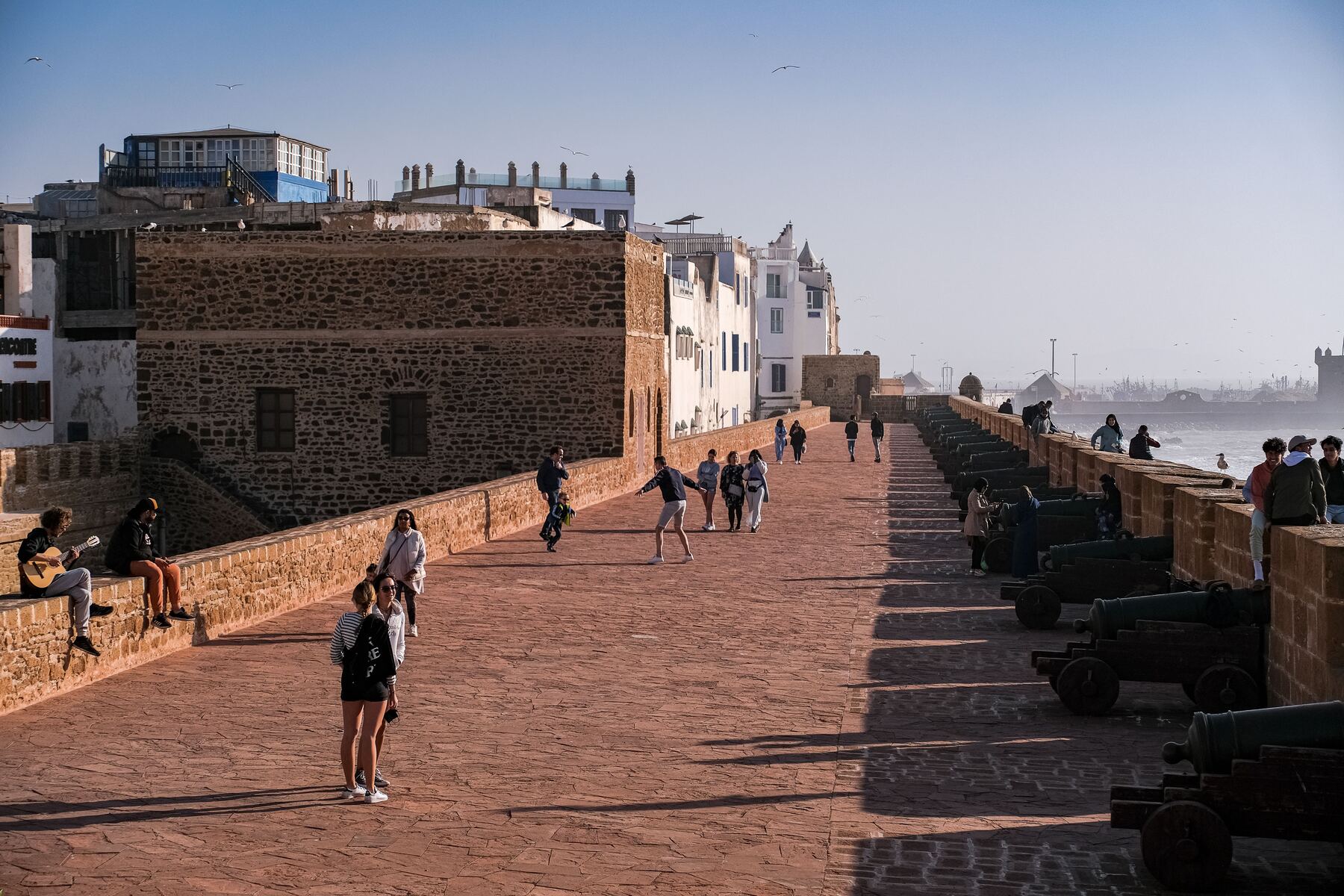
Start your visit with the ramparts, built in the 18th century under the Alaouite dynasty to protect the city from naval invasions. The Skala de la Ville, the best-known section, lets you walk along the rampart walk and admire the bronze cannons still pointed at the Atlantic. The panoramic view of the ocean and the Mogador islands from up here easily justifies the small entrance fee (a few dirhams).
This is also where craftsmen working thuya wood are concentrated, a local timber prized for marquetry. Take the time to watch their craft: carving and inlaying this fragrant wood is a tradition passed down through generations in this part of the city.
2. The fishing harbour and the Skala du Port
Head back down to the harbour, the lively heart of the city. Essaouira remains one of Morocco's largest sardine fishing ports, and the morning atmosphere here is particularly authentic: traditional blue boats returning, fish auctions, nets being mended on the quay. The Skala du Port, a fortified tower at the harbour entrance, offers one of the city's most photographed viewpoints, with the medina framed by its stone arches.
Just outside the harbour, the fish stalls let you buy fresh fish and have it grilled on the spot — a simple, delicious experience at a very reasonable price compared to tourist restaurants.
3. Place Moulay Hassan and the souks
Heading back up towards the centre, you reach Place Moulay Hassan, surrounded by cafés and terraces — the perfect spot for a mint tea break before diving into the souks. Avenue de l'Istiqlal links the medina's two main gates (Bab Doukkala and Bab el-Menzeh) and is the busiest shopping street.
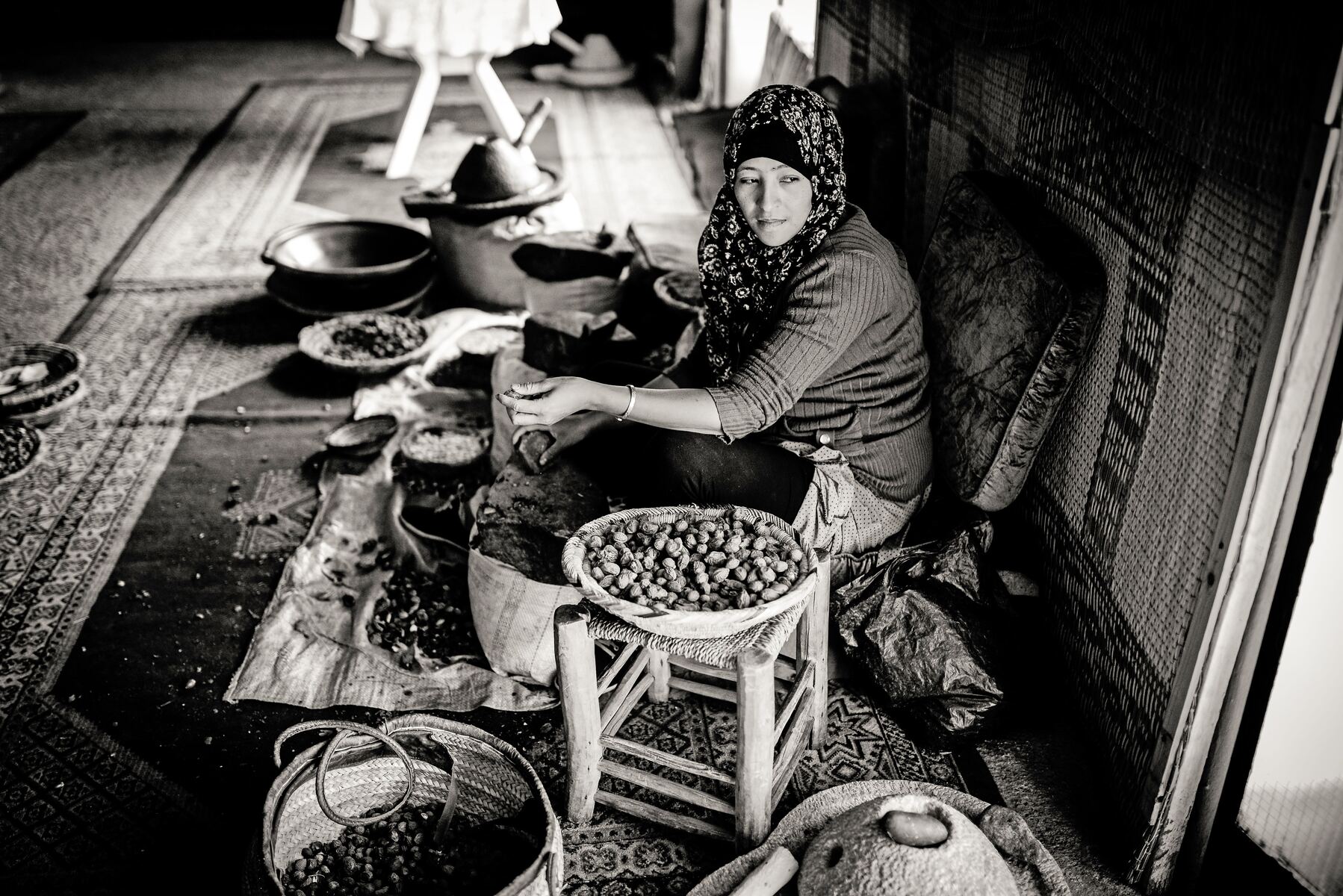
Essaouira's souks, particularly Souk Jdid, are noticeably calmer than those of Marrakech — you can wander without the constant pressure of sellers. You'll find spices, locally worked leather, silver jewellery, colourful Berber rugs and, of course, argan oil products. Haggling remains customary, in a generally relaxed atmosphere.
Prefer a guided visit?
Our local guide shows you the medina while steering clear of tourist traps.
4. The Sidi Mohammed Ben Abdallah Museum
To better understand the region's history and culture, a stop at the Sidi Mohammed Ben Abdallah Museum is worthwhile. Housed in a 19th-century mansion that once served as a royal residence, it holds a collection of Amazigh jewellery, traditional musical instruments, antique pottery and Berber costumes — an interesting cultural complement after wandering the alleys.
Nearby, the Mellah district, the city's former Jewish quarter now largely deserted, keeps traces of a Judeo-Moroccan history that can be explored further at the Bayt Dakira museum, dedicated to the memory of this community once important in Essaouira.
5. The art galleries
A distinctive feature of Essaouira compared to other Moroccan cities: there are more art galleries here than museums. The city has long attracted painters and musicians, and this artistic tradition remains very much alive in several small galleries scattered throughout the medina, where local and international artists exhibit.
Practical tips for your visit
- Best time: early morning for the harbour (fishermen returning), late afternoon for the light on the ramparts and sunset.
- Recommended duration: allow half a day for a full visit without rushing.
- Getting around: the medina is entirely walkable, it's compact and the grid layout makes finding your way easy.
- Budget: access to the ramparts and the Skala costs just a few dirhams; budget instead for crafts if you plan on bringing back souvenirs.
Whether you have half a day or several, Essaouira's medina reveals itself differently at every hour — lively in the morning around the harbour, more contemplative at sunset from the ramparts. That contrast is probably what makes it one of the most endearing places on Morocco's coast.