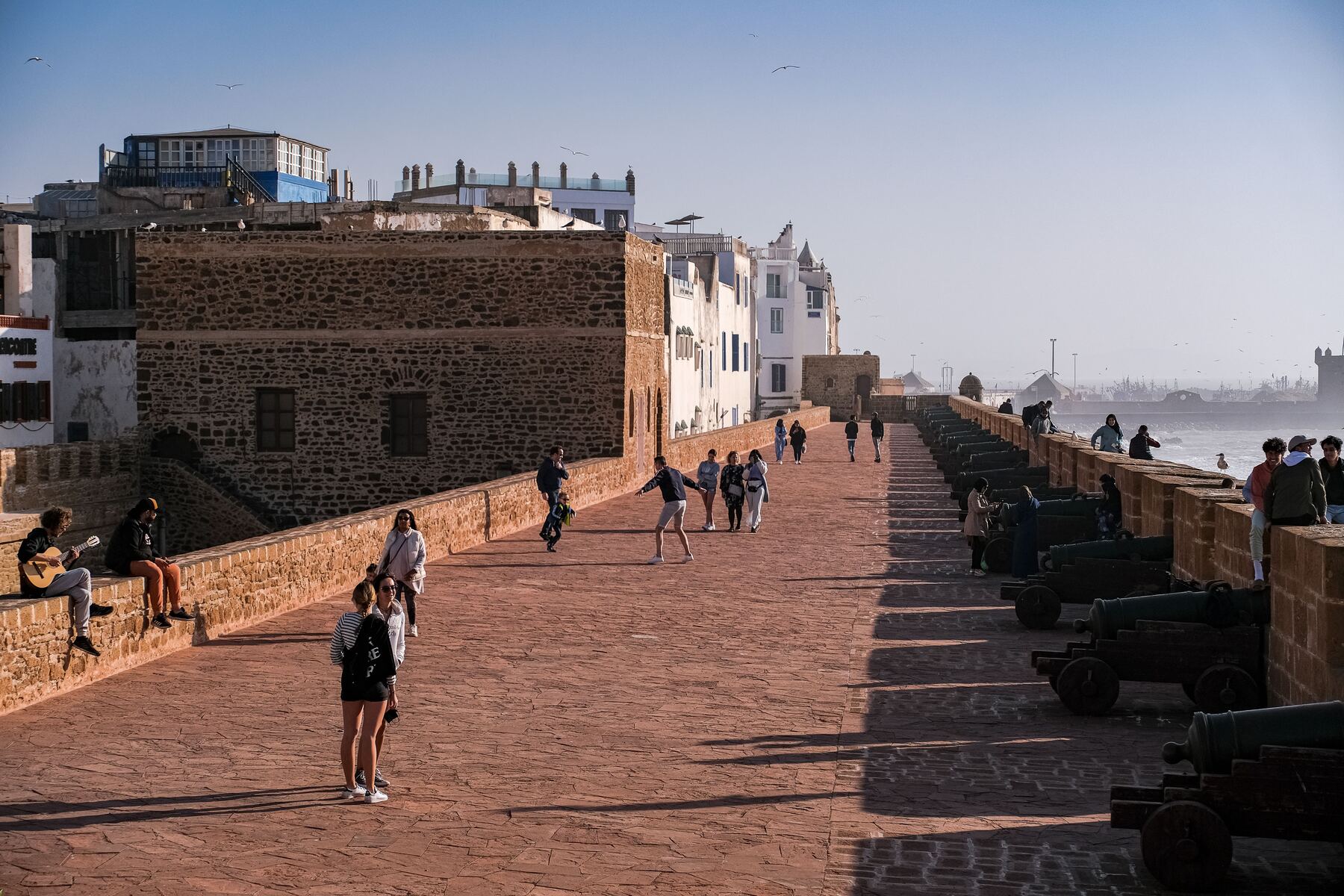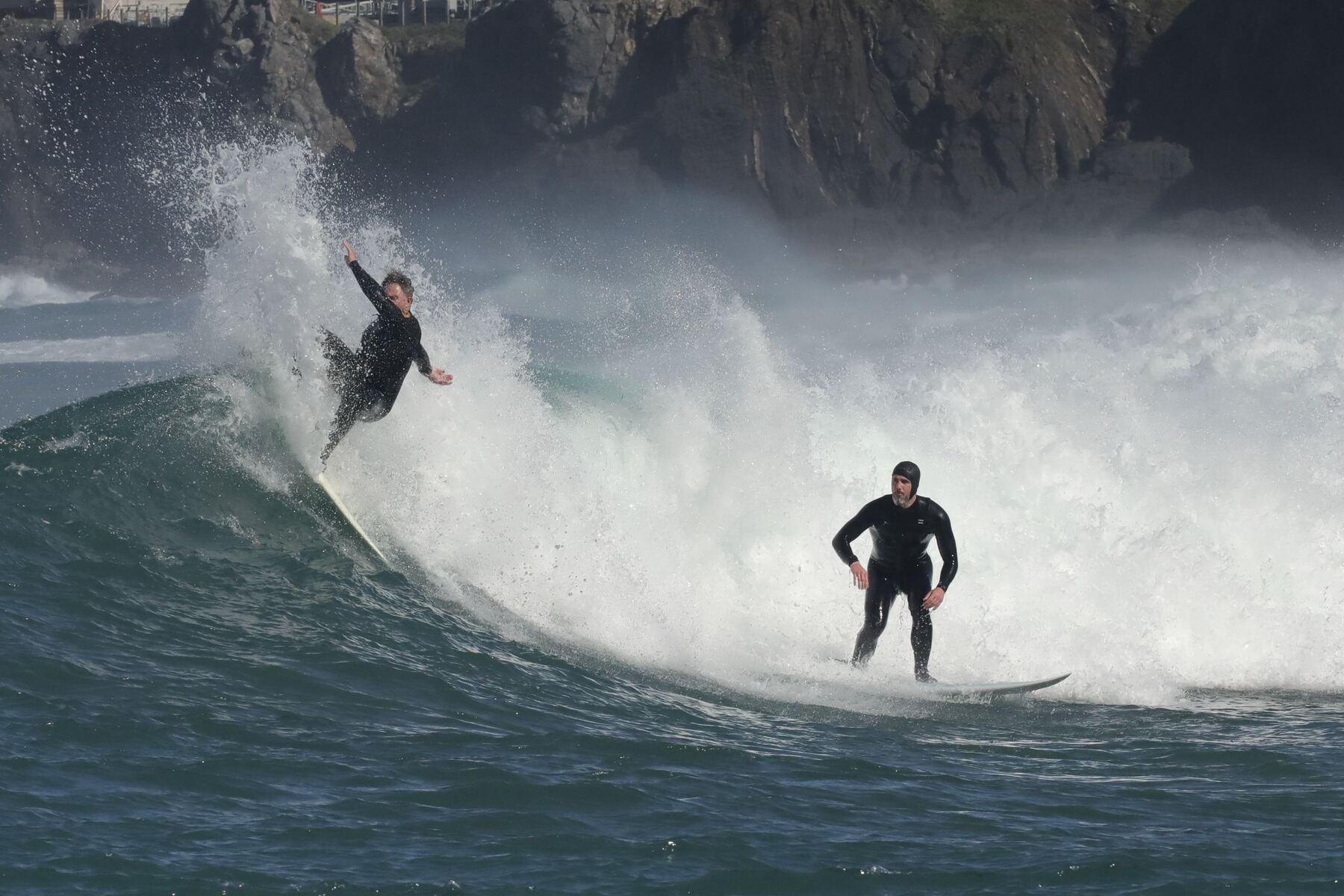
Essaouira, nicknamed the "city of trade winds," has become one of Morocco's most accessible surf destinations. Unlike Taghazout further south, known for its powerful reef breaks reserved for experienced surfers, Essaouira offers gentler waves over a sandy bottom — exactly what you need to learn without intimidation. Here's everything you need to know before your first session.
Essaouira Bay (Tagharte Beach): the beginner spot
This is where it all starts. Tagharte beach, stretching for several kilometres just south of the medina, is protected by the Mogador islands offshore: these islands break up the ocean swell and only let through gentle, regular waves, generally between 50cm and 1.5m. The bottom is sandy across almost the whole beach, with no exposed rocks, making it a particularly safe environment for first sessions.
It's also the city's historic surf school hub: you'll find the largest concentration of instructors and rental gear here, just 5-10 minutes' walk from the medina. The vibe stays relaxed, without the competitiveness you might feel at other spots more favoured by experienced surfers.
What comes after the first lessons? Sidi Kaouki and Moulay Bouzerktoun
Once the basics are mastered on whitewater, two spots let you progress without leaving the region. Sidi Kaouki, about 25km south of Essaouira, offers longer, more consistent waves, in a preserved fishing village atmosphere — reachable by shared taxi for around twenty dirhams. Moulay Bouzerktoun, to the north, tends to attract surfers and windsurfers chasing more technical waves once the wind drops, in a wilder, less crowded setting.
Neither of these spots suits a very first session: they're generally tackled after a few days of practice on the main beach, once you can get past the wave break unassisted.
Which season to start in?
Essaouira's surf calendar works almost the opposite of what you might imagine. For beginners, the best window is between May and September: the waves are smaller and more regular, the water reaches its most pleasant temperature of the year (20 to 22°C), and conditions stay stable from one session to the next. Conversely, winter (December to April) brings more powerful Atlantic swells, sometimes over 2 metres — a playground for intermediate and advanced surfers, but less suited to a first encounter with a board.
| Period | Recommended level | Water temperature |
|---|---|---|
| May - September | Beginner | 20 - 22°C |
| October - April | Intermediate / Advanced | 16 - 19°C |
One small thing worth knowing: in summer, the famous trade wind usually picks up after 10-11am, turning the bay into a kitesurf spot and making surfing trickier. The best sessions of the day are therefore early in the morning, before the wind rises.
Ready to catch your first waves?
Supervised lessons, gear included, all levels welcome.
What gear do you need to start?
No need to bring your own gear for a first trip. Local schools rent foam boards (softboards), lighter and noticeably safer than a resin board in case of a fall or collision — an almost universal choice for learning today. As for wetsuits, even though the water never drops to extreme temperatures, a wetsuit is still recommended: shorty or 2mm in summer, 3/2mm from autumn onward, since Atlantic water always stays cooler than you'd expect.
- Board: a softboard (foam) provided by schools for beginners, expect €10 to €15/day for rental alone.
- Wetsuit: recommended even in summer, included in most lesson packages.
- Sunscreen: essential, the glare off the water is stronger than you'd think.
- Luggage: if you're travelling with your own board, check the sports baggage fee with your airline (usually €35-55 per leg).
How long does it take to improve?
With regular lessons (ideally daily over 4-5 days), most complete beginners manage to stand up consistently on whitewater by the end of the first week, and string together a few first real green waves. Schools generally offer small-group formats (2 to 4 students per instructor), allowing much more effective individual coaching than a large group.
Whether you stay two days or a full week, Essaouira's advantage is being able to easily combine surfing with everything else: a session in the morning, then the medina, the harbour, or another activity in the afternoon. It's this versatility — sport, culture and lifestyle all in one place — that really sets the city apart from Morocco's more exclusive surf spots.